

Your Guide to Medically Necessary Tax Free Massage in Minnesota
Can I Use My HSA or FSA for Massage Thearpy?
Maybe — massage therapy may qualify as a medical expense when it is prescribed to treat a specific medical condition.
Most plans require a Letter of Medical Necessity (LMN) from a licensed healthcare provider confirming that massage therapy is part of your treatment plan.
At The Body Workshop, I accept HSA and FSA cards for medically necessary massage therapy.

Step 1: Visit Your Doctor
Ask your healthcare provider if massage is appropriate for your condition.
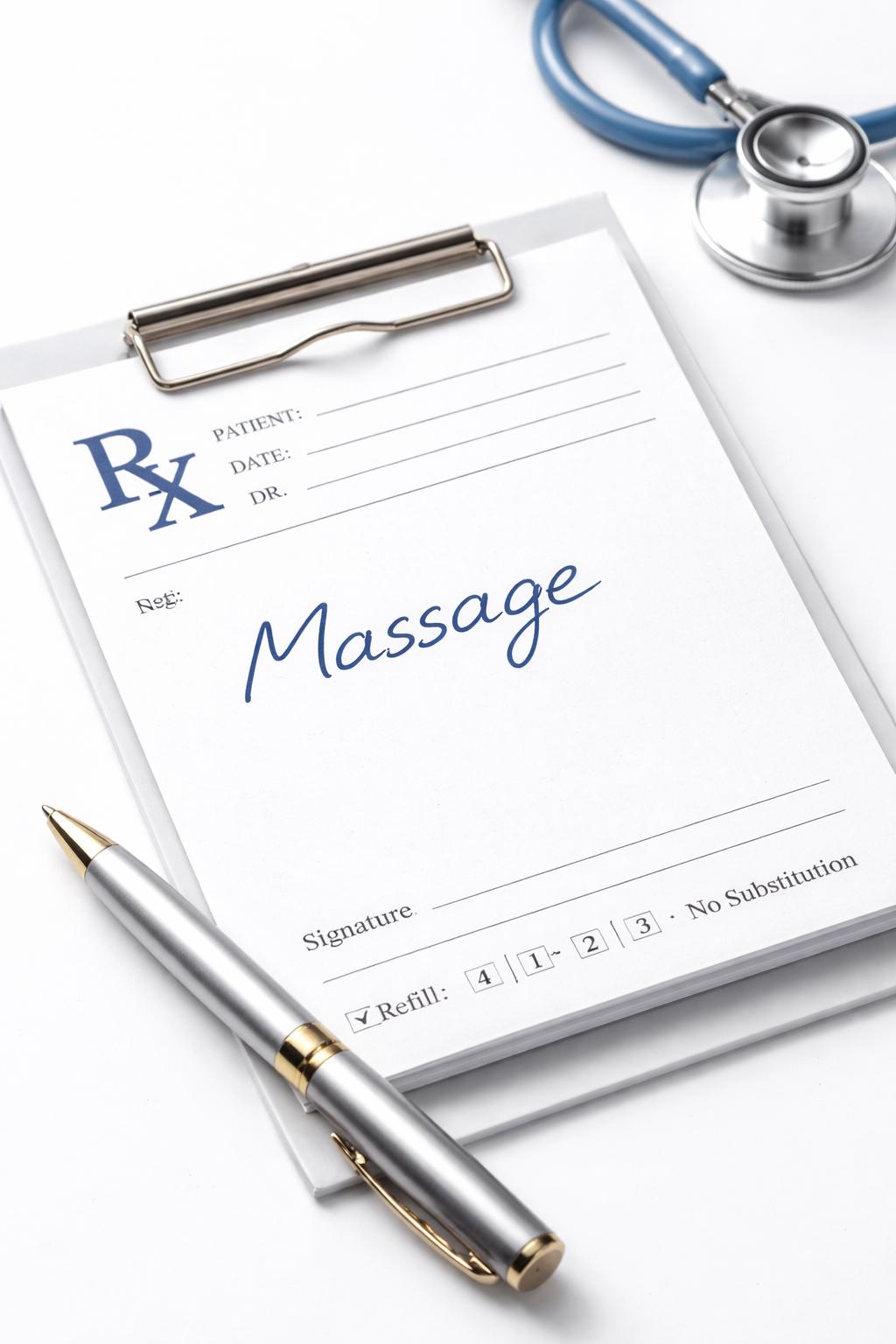
Step 2: Get a *LMN
Get a Letter of Medical Necessity (LMN) from your licensed healthcare provider.

FAQS
Every plan is different, but massage therapy is often recommended as part of care for conditions such as:
- chronic low back pain
- neck and shoulder pain
- tension headaches or migraines
- osteoarthritis-related pain
- fibromyalgia and myofascial pain syndrome
- repetitive strain injuries
- PTSD
- anxiety
- sleep disorders
Your healthcare provider determines whether massage is medically appropriate for your condition.
For massage to qualify, your healthcare provider must write a Letter of Medical Necessity (LMN). This document confirms that massage therapy is being used to treat a specific medical condition, not simply for relaxation.
Most plans require that the LMN include:
- your diagnosis or medical condition
- the recommended treatment (massage therapy) and that it is specifically to treat your condition; not just for relaxation
- how often treatment is recommended
- how long the treatment is expected to continue
- the provider’s name, signature, and date
You will want to keep your session receipts in case your plan requests documentation.
Not necessarily. Many clients keep their Letter of Medical Necessity (LMN) for their own records and provide it only to their FSA or HSA plan administrator if documentation is requested.
However, sharing a copy can be beneficial for two reasons.
1. Sales tax savings
In Minnesota, massage therapy is normally a taxable service. If you choose to share a copy of your Letter of Medical Necessity, I am able to document that your massage is being provided for treatment of a medical condition and exempt the service from sales tax. This saves you money.
2. More personalized care
If you choose to share the information from your LMN, it can help guide your session. Understanding the condition your provider is addressing allows me to customize your massage to better support your treatment goals.
Of course, your medical privacy is always respected, and sharing your LMN is entirely your choice.
That’s completely fine. Many clients choose to pay for their session using another form of payment and then submit their receipt for reimbursement through their HSA or FSA plan.
After your session, you will receive an itemized receipt that typically includes the information plan administrators look for when reviewing medical expenses. If your plan requests documentation, you may also need to provide your Letter of Medical Necessity.
Because plan rules can vary, it’s always a good idea to check with your HSA or FSA administrator about their specific requirements for reimbursement.
Possibly. Some HSA or FSA plans allow transactions to go through at the time of payment without requiring documentation immediately.
However, plan administrators may review certain transactions and request documentation to confirm that the expense qualifies as a medical expense. If this happens, you may be asked to provide:
- a Letter of Medical Necessity from a licensed healthcare provider, and
- an itemized receipt for the service
If documentation cannot be provided, your plan administrator may treat the expense as a non-qualified purchase and apply taxes or penalties according to their rules.
For this reason, clients who plan to use HSA or FSA funds are generally encouraged to obtain and keep a Letter of Medical Necessity for their records.
No. I do not bill health insurance, auto accident insurance, or workers’ compensation claims. Payment is due at time of service.
However, you may still have a few options:
1. Use your HSA or FSA benefits
Many clients use their HSA or FSA for medically necessary massage therapy when they have a Letter of Medical Necessity from a licensed healthcare provider.
2. Submit your receipt to your insurance provider
Some insurance plans offer out-of-network reimbursement for massage therapy, particularly when it is recommended by a healthcare provider. Coverage varies by plan, so it’s best to check with your insurance provider about your specific benefits.
After your session, you will receive an itemized receipt that includes the information commonly required for documentation.